LA Rental Car Wait: Local Playbook to Beat the Line Fast
"Don't let the LA rental car queue dictate your vacation pace; here is the local playbook to beat the wait."
If you land at LAX and spend three hours standing in a terminal line, you have already lost a significant portion of your first day.
Success in Los Angeles starts the moment you touch down, and it requires a strategy that balances logistics with the reality of Southern California's sprawling geography.
Key Takeaways * Pre-book and pre-verify: Never walk into a rental agency without a reservation and a clear understanding of your insurance needs. * Master the timing: Avoid the "rush hour trap" by scheduling pickups and drop-offs outside of peak commuter windows.
* Plan for the scale: Understand that the 468.7 square miles of land in the city and the massive 9.86 million residents in the county make driving a logistical feat, not just a transit method.
Why is the LA Rental Car Waitline Such a Big Deal?
The sun beats down on the asphalt at LAX, and the sound of constant jet engines fills the air as hundreds of travelers shuffle toward the rental car counters.
The scale of travel in the region is massive, as seen in how the United States recorded 45,037,000 international tourist arrivals in 2020 according to the World Bank.
You look at your watch and realize you've been standing in line for forty minutes, and your planned drive to Santa Monica is already slipping away.
The sheer scale of the Los Angeles driving environment makes the initial pickup process a critical bottleneck.
The city of Los Angeles covers a total area of 502.7 square miles, and when you factor in the surrounding Los Angeles County—the most populous county in the United States with an estimated 9.86 million residents as of 2022—the transit demands are staggering.
In a place where the car is the primary lifeline, a delay at the rental counter isn't just a minor inconvenience; it is a domino effect that can ruin an entire itinerary.
While the 2024 US Census Bureau American Community Survey noted that around 6.2% of working Los Angeles city residents commute via public transit, the vast majority of visitors and even many locals rely on personal vehicles to navigate the sprawling distances between neighborhoods.
When you realize that the time spent waiting in a terminal can often exceed the time spent driving to your first destination, the necessity of a "line-beating" strategy becomes clear.
How to Secure Your Rental Car Pickup Smoothly (Beat the Line)
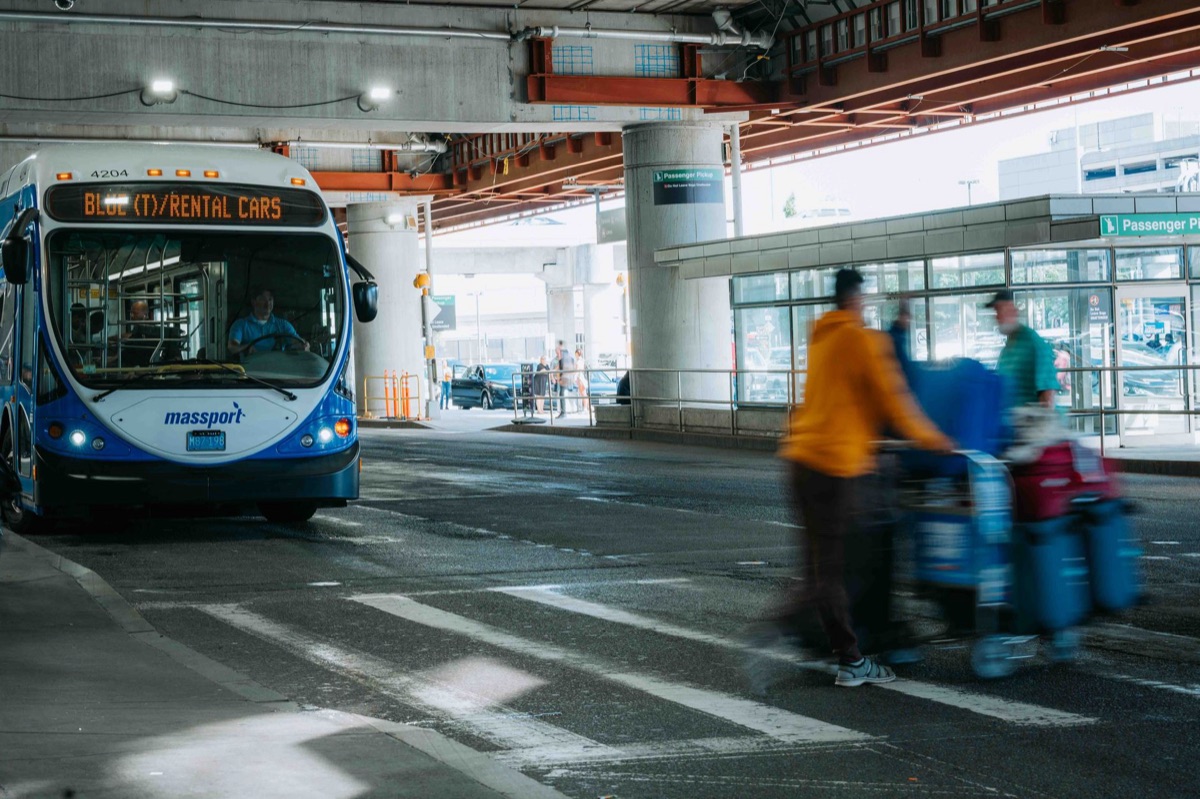
You stand at the terminal exit, clutching a printed reservation and a digital confirmation, watching a crowd of exhausted travelers wander aimlessly toward the rental car shuttles. You know that while they are searching for information, you are already moving toward the exit.
When I first flew into LAX and tried to navigate the shuttle system without a plan, I spent nearly two hours just trying to find my vehicle and get the paperwork signed. It was a frustrating way to start a trip.
Understanding local demographics can be helpful, such as noting that according to a 2014 study by the Pew Research Center, Christianity is the most prevalently practiced religion in Los Angeles at 65%.
The most effective way to beat the line is to treat your reservation as a contract, not a suggestion. Booking in advance is mandatory, but the real secret lies in the "pre-check" process.
- Digital Check-in: Many major agencies allow you to complete paperwork and identity verification via an app before you arrive. Use this to bypass the physical counter entirely.
- The Airport vs. Off-Site Dilemma: While airport pickups are convenient, they often involve longer shuttle rides and higher fees. If you are staying in a central area like Hollywood or K-Town, sometimes taking an Uber to an off-site rental location can save time and money, though it requires careful scheduling.
- Insurance Clarity: One of the biggest causes of long lines is the "negotiation" at the counter. If you arrive and spend thirty minutes debating supplemental insurance, you are stuck in the queue. Decide on your coverage—whether you are using a credit card's insurance or purchasing the agency's plan—before you step foot in the terminal.
Timing your arrival is equally vital. If your flight lands at 4:00 PM on a weekday, you are walking straight into the tail end of the afternoon rush and the peak rental return window. Aiming for mid-morning or late-night arrivals can often result in a much faster hand-off.
But getting the car is only the first hurdle. The real challenge begins when you hit the road.
How do I drive LA like a local? The red brake lights stretch toward the horizon on the 405 freeway, a sea of steel and glass that seems to never end. You grip the steering wheel, feeling the tension of the afternoon commute, and realize that the GPS estimate of "45 minutes" is likely optimistic.
When planning your routes, keep in mind that according to the 2024 US Census Bureau American Community Survey, around 6.2% of working Los Angeles (city) residents commute to work via public transit.
Navigating LA requires a shift in mindset from "distance" to "time." In most cities, you measure travel in miles; in Los Angeles, you measure it in minutes and traffic patterns.
| Factor | Tourist Approach | Local Strategy |
|---|---|---|
| Navigation | Relying solely on distance | Using real-time traffic apps (Waze/Google) |
| Parking | Searching for the closest spot | Finding a secure lot and walking |
| Timing | Driving whenever you feel like it | Avoiding the 7–10 AM and 3–7 PM windows |
| Route | Taking the most direct freeway | Using surface streets to bypass major bottlenecks |
The reality of LA driving is that the freeway is often a trap. While the road network is vast, the congestion can turn a short trip into a multi-hour ordeal. When driving, remember that the "fastest" route on a map is often the most congested.
Parking is the second major hurdle. In high-density areas like Hollywood or the pier at Santa Monica, street parking can be a nightmare and often comes with strict time limits and residential permit requirements.
Always look for a dedicated parking garage or a lot first; the time spent circling a block looking for a "free" spot often costs more in stress and fuel than a paid lot.
When the traffic becomes truly insurmountable, the smartest move is to recognize when the car is a liability. There are times when switching to a rideshare service like Uber or Lyft is more efficient than fighting through a gridlocked downtown corridor.
However, driving efficiently isn't just about avoiding traffic; it's about how you structure your day.
How can I maximize my LA road trip efficiency? You sit at a small cafe table in West Hollywood, spreading a paper map across the wood, marking circles and lines to connect the Hollywood Sign to the Getty Center. You realize that if you don't group your destinations correctly, you will spend your entire vacation inside a moving metal box.
To make the most of a rental car, you must integrate your driving with your destination strategy. A common mistake is trying to visit a coastal landmark and an inland attraction on the same afternoon.
The Strategic Loop Method 1. Group by Region: Dedicate specific days to specific zones. For example, pair Santa Monica and Venice Beach on one day, and the Griffith Observatory and Hollywood on another. 2.
The "Directional" Rule: If you are driving from the airport to an inland hotel, plan your "must-see" stops along that specific corridor to avoid backtracking. 3. Avoid the "Cross-Town" Dash: Avoid driving from the South Bay to the San Fernando Valley during peak hours.
The transit time can be double the actual driving time.
A well-structured itinerary should account for the "dead time" of driving. If you have a long stretch of driving ahead, schedule a scenic pit stop or a specific food destination (like a famous taco truck) to make the transit feel like part of the adventure rather than a chore.
But even with a perfect plan, you need to be prepared for the unexpected.
Beyond the Rental: Essential LA Driving Survival Guide
The sun hangs low in the sky, casting long, dramatic shadows across the wide boulevards, and the temperature begins to drop rapidly as the coastal breeze rolls in. You realize that the driving environment is as much about the atmosphere and the surroundings as it is about the road.
Living and driving in LA requires an awareness of the environment. The scale of the county and the diversity of the neighborhoods mean that driving conditions and even the "feel" of the road can change every few miles.
Safety and Awareness Tips * Nighttime Visibility: The bright Southern California sun can create intense glare during the day and deceptive shadows at night. Ensure your rental's windshield and lights are in good condition during the inspection.
* Neighborhood Awareness: While driving, remain observant of your surroundings. Certain areas may have different parking enforcement or higher pedestrian activity. * The "Rental Inspection" Habit: Always take a video walkthrough of your rental car before leaving the lot.
In a city where minor scrapes and parking lot bumps are common, having a time-stamped record of the car's condition is your best defense.
Understanding the vastness of the area is key. You aren't just driving through a city; you are navigating a massive, interconnected web of suburbs and urban centers. Respect the traffic, plan for the delays, and you will find that the car is the key to unlocking the best parts of the West Coast.
#




Comments 0